From Gaganyaan to Aditya: ISRO's New Identity

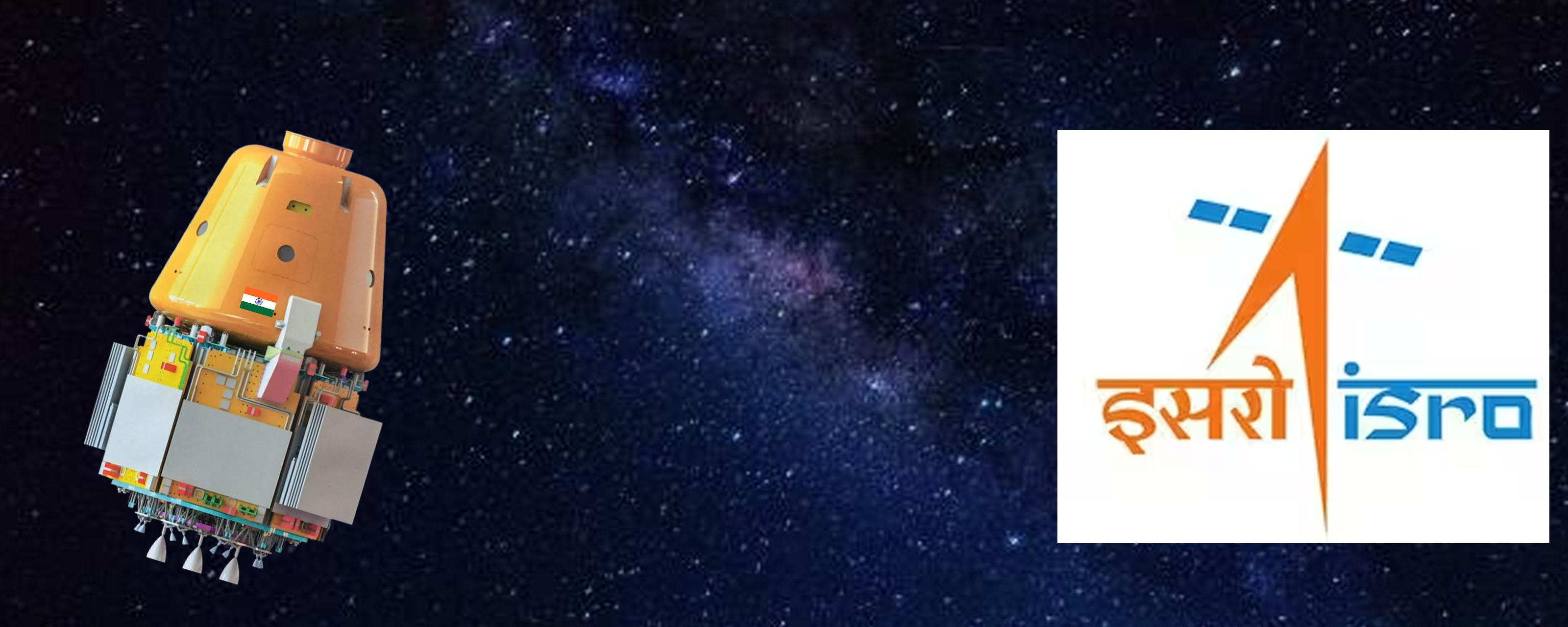
August 2025 has been etched into history as a landmark and transformative month for the Indian Space Research Organisation (ISRO). During this period, several major technical achievements—the successful testing of a human-rated spacecraft, the execution of a groundbreaking joint satellite mission, the announcement of a super-heavy-lift launch vehicle, and significant contributions to solar physics—have elevated India’s space capabilities to a new orbit. These accomplishments establish India not merely as an emerging space power, but as a prominent, autonomous, and influential pillar in the global space order. ISRO’s journey, paralleling the developmental trajectory of the American space agency NASA, underscores India’s transition from a ‘follower’ to a ‘parallel power’.
The Changing Equation of Space Dominance
In the 21st century, space exploration is no longer merely a subject of scientific curiosity, but a decisive domain for geopolitical dominance, technological superiority, and economic opportunities. Moving beyond the bipolar space competition of the Cold War era (USA vs. Soviet Union), today’s landscape is multipolar, involving major actors like China, Europe, and now India. In this competitive environment, August 2025 proved to be a pivotal moment for ISRO, as the organization demonstrated its capabilities across several critical areas, fundamentally altering its position on the global stage. These achievements indicate that ISRO now stands on par with established institutions like NASA, capable of shaping the future of global space.
Attaining Strategic Autonomy
Two primary criteria for any nation to achieve space superpower status are: the sovereign capability to send humans into space, and self-reliance in placing heavy payloads into desired orbits. In August 2025, ISRO made decisive progress in both these areas.
The IADT-01 test, successfully conducted on August 24, 2025, symbolizes the technical maturity of the Gaganyaan mission. This test successfully evaluated the accuracy of the crew module’s atmospheric re-entry and parachute-based descent system. This process is the most complex and high-risk phase of human spaceflight, where there is no margin for error. NASA spent years proving this technology for its Apollo and Space Shuttle programs. ISRO’s overcoming of this significant milestone certifies that India has mastered the necessary engineering and system integration to ensure the safe return of its astronauts. This achievement places India in the exclusive club of nations—the United States, Russia, and China—that possess indigenous human spaceflight capability.
Later the same month, the ISRO chief’s announcement of a new rocket, 120 meters tall and capable of carrying a 75-ton payload to Low Earth Orbit (LEO), highlights India’s long-term space strategy. This capability is equivalent to NASA’s ‘Space Launch System (SLS)’ and SpaceX’s ‘Starship’. Such a vehicle will not only make India a major player in the most lucrative segment of the commercial satellite launch market (heavy communication and military satellites) but also pave the way for interplanetary missions like lunar bases, Mars missions, and future space stations. This announcement signifies a strategic shift in ISRO’s thinking—no longer limited to need-based applications, but now focused on future exploration-driven opportunities.
A New Paradigm of Global Cooperation
The NISAR (NASA-ISRO Synthetic Aperture Radar) satellite, launched in July 2025, successfully deployed its 12-meter reflector antenna and began operations in August. This mission is an excellent example of the evolving nature of cooperation between ISRO and NASA. Previously, in such collaborations, ISRO often played a junior partner role, contributing data or smaller components. In NISAR, ISRO provided the S-band SAR payload, the spacecraft bus, and the launch vehicle, which are as critical to the mission’s success as NASA’s L-band payload.
NISAR’s success demonstrates that India is no longer merely a recipient of technology but an equal partner capable of co-developing and co-operating state-of-the-art systems. This mission will provide data on global issues such as climate change, disaster management, and ecological monitoring, further strengthening India’s role as a responsible global scientific stakeholder.
Confluence of Science and Society
The sustained success of space programs depends not only on technical achievements but also on public support and the ability to inspire the next generation.
Building National Consciousness
National Space Day, celebrated on August 23rd with the theme ‘Aryabhatta to Gaganyaan: Ancient Wisdom to Infinite Possibilities,’ reflects ISRO’s mature approach to public engagement. Like NASA, which for decades has made its missions a source of American pride and inspiration, ISRO is now consciously attempting to link space with national consciousness. Issuing educational modules through NCERT and presenting future astronauts as national icons ensures that the space program remains not just a government initiative but becomes a mass movement.
Aditya-L1’s Contribution
In August 2025, the Aditya-L1 mission’s completion of one year of operations establishes India as a significant data producer in the field of solar physics. The unique data provided by its SUIT payload has enhanced global understanding of the Sun’s corona and solar flares. While previously the world largely relied on missions like NASA’s Solar Dynamics Observatory (SDO), Aditya-L1 now offers a complementary and independent data source. This signifies ISRO’s transition from a ‘data importer’ to a ‘data exporter’.