Phantom Wars: US vs China?

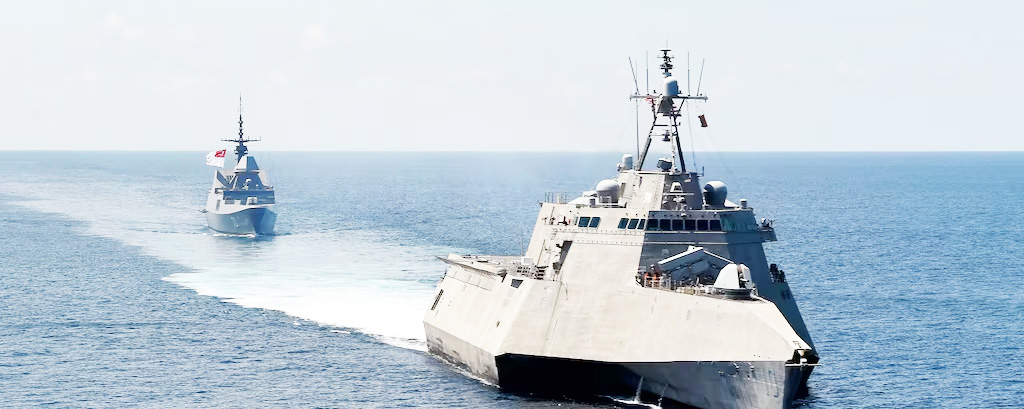
In the policy-making corridors of Washington today, one idea is taken as gospel: China aims to replace the United States as the world’s dominant superpower and is bent on aggressively expanding its territory. Both Democrats and Republicans are united on this, and this consensus has shaped America’s China policy, which now focuses on war preparations, military deterrence, and economic ‘decoupling.’
But what if this entire understanding is wrong? What if America is pouring all its energy into fighting an enemy that, in reality, doesn’t exist?
If we look closely at what China says and what it wants, a completely different picture emerges. China is not an expansionist power seeking to redraw the world map; rather, it is a ‘status quo’ power with limited global objectives. China’s leaders are far more focused on their internal challenges and the stability of their regime than on external expansion. Yes, it has foreign policy demands and often bullies its neighbors, but it does not seek to invade or conquer them. It is extremely sensitive about its control over territories that the rest of the world has, at least diplomatically, recognized as Chinese—Hong Kong, Taiwan, Tibet, and Xinjiang. But China’s ambitions rarely extend beyond this.
If China is a status quo power with limited aims, and not a grave threat to American dominance, then the United States is taking the wrong approach to the world’s most important bilateral relationship. Washington’s emphasis on military deterrence and war preparations risks creating the very military confrontation that need not exist. Instead of viewing China as a dangerous threat, America needs to understand China’s core interests so that it knows where China might be willing to compromise and where it will not.
What Does China Want? Listen to Its Own Voice
The best way to understand what China wants is to listen to what its leaders, journals, and media outlets say. Although many observers dismiss public statements as mere propaganda or cheap talk, there are good reasons to believe that China means what it says.
China has stated its core interests clearly and consistently. In September 2011, before Xi Jinping came to power, Beijing published its first official foreign policy white paper, which defined China’s core interests. These included: internal political stability, national sovereignty and territorial integrity, the primacy of the Chinese Communist Party (CCP), and economic and social development. Under Xi’s rule, the party’s core interests have not changed.
What is largely absent from China’s description of itself and its interests is any grandiose ambition to become a global or even a regional leader. In a major speech on the 100th anniversary of the CCP’s founding in 2021, Xi did not call for Chinese hegemony or global leadership. The only mention of foreign policy was to reiterate China’s opposition to aggressive actions overseas.
Xi and other Chinese leaders often call for a larger role for China in global governance, but this does not mean that China seeks to replace the United States as the dominant global power. Xi’s recent ‘Global Governance Initiative’ proposal is explicit in its aim to preserve the United Nations-based international system rather than overturn it. Nor does China want to be the sole power in charge of these institutions. Instead, China is clear—and has been since the beginning of the Cold War—that its goal is multilateralism.
China’s global actions are aimed at promoting both economic growth and political influence, but these international efforts are internally targeted and stem from domestic issues. For example, China launched the Belt and Road Initiative (BRI) to alleviate excess capacity in industries related to infrastructure construction. Chinese leaders frame the BRI as a tool to build international support for China’s development and governance models—but the goal is not to spread Chinese values or to encourage other countries to adopt China’s political and economic systems.
The Testimony of History: Taiwan, Tibet, and Border Disputes
To understand China’s territorial claims, it is essential to look at history. Its claim on Taiwan is not new. This issue dates back to the 19th century when the Qing dynasty lost Taiwan to Japan. Since then, every ruler of China has considered Taiwan a lost territory that must be regained. This claim predates Taiwan’s semiconductor factories or its strategic location. Chinese leaders would want unification with Taiwan even if it held no military or economic value.
China’s other territorial concerns are also at least a century old. Hong Kong and Macau, which were under British and Portuguese colonial rule respectively, were returned to China in the late 1990s. China’s rule over Tibet and Xinjiang dates back to the Qing dynasty.
In contrast, control over the East China and South China Seas has been less critical to China. Disputes over maritime claims are rooted in the chaos of the first half of the twentieth century rather than in enduring Chinese claims. The origin of the so-called ‘nine-dash line,’ which China uses to demarcate its claims in the South China Sea, is a map published in 1948. But China has also shown flexibility in resolving border disputes with its neighbors. For example, it removed parts of this line to improve relations with North Vietnam.
China has often agreed to relinquish disputed territory to settle claims and establish firm borders when its core interests are not at stake. To settle disputes with North Korea, for example, in 1962 and 1964, China gave up the peak of Mount Baekdu and more than 500 square kilometers of nearby territory. China and Vietnam signed bilateral treaties codifying their borders in 1999 and 2000.
America’s Misunderstanding and the Lessons for India
Because Washington has misunderstood what China wants, its policy towards China has been misdirected. Current policies aimed at diplomatically and economically isolating China are designed to combat an expansionist power that seeks to displace the US and aggressively expand its territory. But these policies will do little to engage a country that is far more focused on preserving the status quo and maintaining its internal stability.
This means the US military buildup in the Pacific is unnecessary and counterproductive. It wastes resources preparing for low-probability contingencies, which weakens US military strength in the long term. It also increases the possibility of escalating tensions with China rather than lowering them.
Trying to use force to shape the future status of Taiwan is even more misguided. Since China’s claims to Taiwan are ideological and historical, not purely strategic, attempting deterrence is more likely to provoke. The goal should be to preserve the status quo, which has worked for the past four decades.
There are deep lessons in this for India. Instead of mimicking US policy and viewing China as an existential threat, India must understand China on its own terms. China is a competitor for India, a neighbor with deep historical and economic ties, but also with tensions on the border. It should not be seen as an enemy that wants to swallow India whole.
India’s China policy must be based on realism, not Western fears. This means: Military Balance, but Avoiding Unnecessary Confrontation: India must remain militarily strong to protect its borders, but it should avoid getting drawn into an uncontrolled arms race with China. Diplomacy and dialogue must always be the priority.
Economic Engagement, but Guarding Against Dependency: China will remain India’s largest trading partner. Attempting to sever this relationship would be impractical. Instead, India should focus on reducing the trade deficit, diversifying its supply chains, and establishing clear rules for Chinese investment.
Leveraging Multilateral Forums: India should use platforms like BRICS, the SCO, and the G20 to maintain dialogue with China and cooperate in areas of mutual interest. This is an effective way to balance China’s influence and advance India’s own interests.
Maintaining India’s Own ‘Strategic Autonomy’: Most importantly, India must determine its foreign policy without succumbing to pressure from any external power. It should neither join a US-led anti-China bloc nor accept Chinese hegemony. India’s path must be its own.
Conclusion: A Rational Competitor, Not an Existential Threat
Dealing effectively with China requires understanding China as it actually is, not the China that American policymakers have imagined and accepted as fact. To realize that China’s objectives are far less expansionist, confrontational, or threatening to American (and Indian) interests than most policymakers believe is neither unrealistic nor unfairly sympathetic to China.
China is telling the world—and itself—what it wants. If Washington and New Delhi want to deal with China effectively, they would do well to listen carefully.
Healthy competition in technology, trade, and even education can be beneficial for both sides without triggering fear-driven responses stemming from the view that the other side is an existential threat. India should view China as a rational competitor, not an unimaginable monster, and should base its policies on this realistic understanding.