Air in Despair: Where is the Repair?
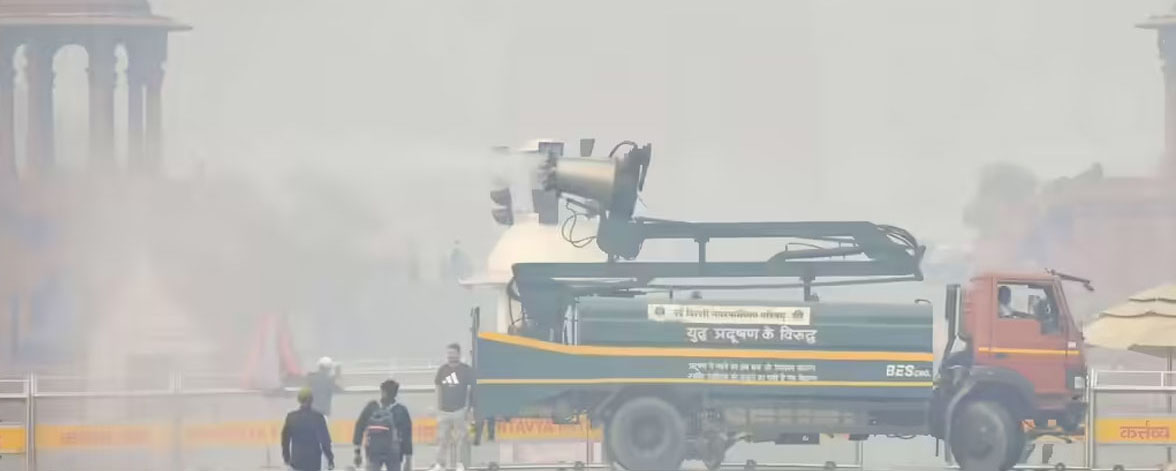
Our capital possesses the most toxic air on Earth, and the city ranking next is nearly three times behind it. "Poison permeates New Delhi's air"—this headline is repeated in the media almost daily every year from October to February. Its continuity is proof of our apathy toward this poison. When the WHO released the list of the world's 15 most polluted cities for 2016, 14 were in India. Delhi, with its brown, grey skies instead of blue, topped the list. Even today, in 2025, we have retained this position.
There is no parallel in the world for the air in our capital. In winter, its air remains ten times worse than World Health Organization standards and three times worse than national standards. The Air Quality Index (AQI) in the capital often crosses 500, and in some areas, it frequently exceeds 700. Once, out of 177 polluted countries, our rank was 155th; then 176th out of 180; today, it is 177th out of 183. There is a strong perception in the public mind that only the air in Delhi or large industrial cities is toxic, or that apart from a few small and large cities occasionally mentioned in the news, the rest are fine. But this is not the case.
Hardly any city in Rajasthan, Maharashtra, Uttar Pradesh, Haryana, or even the southern states appears below the 100-mark on the Air Quality Index. While this falls in the 'poor' category, it is deemed 'satisfactory' compared to indices of 500 to 700. Most of the country's urban population lives amidst extremely poor and lethal air ranging between 200 and 400. They cannot even imagine that the average AQI of Oslo, Norway is merely 1 to 2; Detroit, once notorious for auto-industry pollution, is 8; Algiers, a busy coastal city known for heavy vehicle traffic and industrial activity, is 11; Sydney, Australia is 16; and Salt Lake City can be 17.
Citizens of Indian cities—and perhaps even villagers—may never feel what such clean air is like. If this continues, the atmosphere of the country's industrial cities will become suffocating in a few years. Like Beijing, Hebei, and Tianjin a decade and a half ago, hospital beds will be filled with patients suffering from air pollution; people will carry their own clean air in cans or pouches. The market for pollution-related products—air purifiers, humidifiers, electrostatic precipitators, catalytic converters, dehumidifiers, advanced filtration systems, specialized masks, and portable oxygen cans—will be booming.
Whether on the part of the government or society, this negligence is suicidal. But the question is: what should be done? Is there an infallible cure for this air? Why is our government not adopting the measures taken by countries that brought their urban air pollution from triple-digit indices down to double digits? Will those measures not suit us, or do we simply not want to implement them?
Generally, in China, Europe, and America, immediate corrective measures are initiated as soon as the AQI crosses 100. Norway massively reduced fossil fuel vehicles and encouraged electric vehicles, while Colombia controlled air pollution in its capital, Bogota, by electrifying the public bus network and promoting the use of bicycles.
However, China appears to be a potential model for us because development and urbanization are common factors for air pollution in both nations. It implemented a mix of long-term policies and immediate actions. Under geographical measures, wind-ventilation corridors were created in cities so smog wouldn't accumulate. Heavy polluting industries like steel and cement production were shut down, upgraded, or relocated far away, and industries were forced to adhere to environmental protocols.
Cities were incentivized to improve their air quality standards. Promoting renewable energy and clean technologies, coal usage was minimized while the use of clean energy like natural gas and solar power was increased. Old vehicles were removed from roads to promote electric vehicles. Not only were stricter standards introduced, but strict penalties were also imposed for deviations under a rigorous monitoring system. The punitive approach fostered a culture of accountability. It launched massive plantation projects like the "Great Green Wall." Furthermore, its three-year "Blue Sky" plan, which improved energy systems, pollution control in industries, and clean energy usage, proved extremely successful.
This reduced air pollution in many cities by almost 60 percent. Chinese policies reduced air pollution in several cities, including Beijing, by up to 35 percent annually within four years.
In China, air quality data is released in real-time without manipulation; predictions regarding pollution levels are made 72 hours in advance. Pollution emergencies trigger school closures, bans on vehicles, and the issuance of public health alerts to citizens. The Chinese government has invested heavily in wind and solar energy. As a result, the AQI, which used to be in the hundreds, has reached double digits.
China's success is remarkable. It has also promised to cooperate with us in tackling air pollution. The government will surely welcome its proposal, putting aside border and other disputes. But the question is, will its treatment system become a cure for our air too? Will we be able to adopt a restrained, strict air-pollution control strategy like China?
Will curbing industrial development at the cost of environmental health be possible? Will the practice of giving leeway to corporates in environmental regulations stop? With the reduced budget of the Ministry of Environment, will scientific research increase? Apart from forcing states to spend the allocated budget, will the Center provide resources to run long-term plans in this regard? How prepared is the government to provide power supply and millions of charging stations to promote electric vehicles? How easy will strict environmental monitoring and a harsh penalty system be against the corporates and industries that manage votes and electoral funds, as seen in China? The general public is neither aware nor worried or alert about its magnitude. Moreover, since this is not a voting issue for the government, how will the level of governance accountability and citizen awareness increase?
It is also clear that unless the public suffering from air pollution agitates and strives for change themselves, it is difficult to bring about a major transformation with anyone's help or by adopting any model. We cannot classify and supply air like drinking water or utility water. To make the entire atmosphere breathable, instead of a borrowed model, we must become self-reliant and formulate a plan suited to our country's social system. We must run a campaign with honesty and complete willpower. That is the only cure for this air.