Eastern Front: The Unfolding Strategic Crisis

South Asia’s geopolitical landscape is passing through one of its most volatile, transformative and explosive phases in recent history. Bangladesh—India’s eastern neighbour that once stood as a proud model of secular nationalism and linguistic identity after the Liberation War of 1971—is today grappling with a severe existential crisis. The political shift in Dhaka has triggered chaos, radicalisation and a sharp resurgence of anti-India sentiment, setting off alarm bells in New Delhi’s South Block. The death sentence handed down to Sheikh Hasina and the wave of retribution unleashed against the Awami League leadership are not merely internal political developments; they represent an emerging strategic challenge to India’s national security architecture.
In this shifting landscape, the increasing presence of Pakistan and other foreign intelligence actors in Bangladesh has reshaped the balance of power. At the same time, India has quietly begun recalibrating its eastern security doctrine—from the Siliguri Corridor to the Bay of Bengal—in ways that reflect a far more proactive and assertive strategic posture.
Bangladesh: The New Wave of Radicalisation
To describe Bangladesh’s current condition simply as “political instability” would be an understatement. What is underway is nothing short of an ideological upheaval. The interim administration led by Muhammad Yunus, instead of restoring equilibrium, appears increasingly vulnerable to the influence of radical forces. Dhaka’s invocation of the 2013 extradition treaty to demand Sheikh Hasina’s return may outwardly resemble diplomatic pressure, but it is driven more by political vengeance than by legal argumentation.
Even more troubling is the resurgence of groups such as Hizb-ut-Tahrir, which now openly rallies on the streets of Dhaka demanding the establishment of a “Caliphate.” Once confined to the margins, Jamaat-e-Islami is rapidly regaining relevance by aligning itself with mainstream political factions and student bodies.
The immediate and most vulnerable victims of this radical upswing are minority communities—particularly Hindus. Between August 2024 and June 2025, more than 2,400 hate-crime incidents were recorded, signalling either the state’s incapacity or its tacit approval of extremist activities. Bangladesh’s foundational principle of secularism is being systematically eroded.
This social and demographic churn represents a direct threat to the security of India’s Northeast. History is replete with examples: whenever radicalisation has gained ground in Dhaka, it has spilled over into India in the form of illegal migration and militant resurgence.
Pakistan’s Return and Bangladesh as an Intelligence Battleground
India’s most significant strategic concern today is the strengthening of ties between Bangladesh and Pakistan. Whether the wounds of 1971 are being consciously ignored, or whether a new anti-India axis is taking shape, the reality is undeniable: Pakistan’s military establishment and the ISI have intensified their activities in Dhaka.
In the last year alone, high-ranking Pakistani officials—including the Chairman of the Joint Chiefs of Staff Committee and the Naval Chief—undertook official visits to Bangladesh. These are not routine diplomatic courtesies. They signal the formation of a new strategic compact.
Historically, Pakistan used Bangladesh as a launchpad for providing shelter and operational support to insurgent groups in India’s Northeast. The renewed ISI presence, coupled with the heightened activities of the CIA, Turkish intelligence, and Chinese security operatives, has transformed Bangladesh into a crowded arena of international intelligence rivalry.
From New Delhi’s perspective, this is not merely foreign manoeuvring; it is part of a coordinated effort to encircle India. Bangladesh’s territory could once again serve as a staging ground for a proxy conflict or a “shadow war” against India’s eastern flank.
Crisis Around India’s ‘Chicken Neck’
At the heart of this geopolitical turbulence lies India’s narrow Siliguri Corridor—famously known as the “Chicken Neck.” This slender stretch is the only link between mainland India and the entire Northeast. Recent statements by Muhammad Yunus reviving the idea of a “Greater Bangladesh,” accompanied by maps depicting Indian territories within Bangladesh’s supposed sphere of influence, represent a direct affront to India’s sovereignty.
Such claims are not merely rhetorical flourishes. They reflect deeper ambitions—possibly encouraged by external actors—to destabilise the Siliguri Corridor and sever India’s connection to the Northeast.
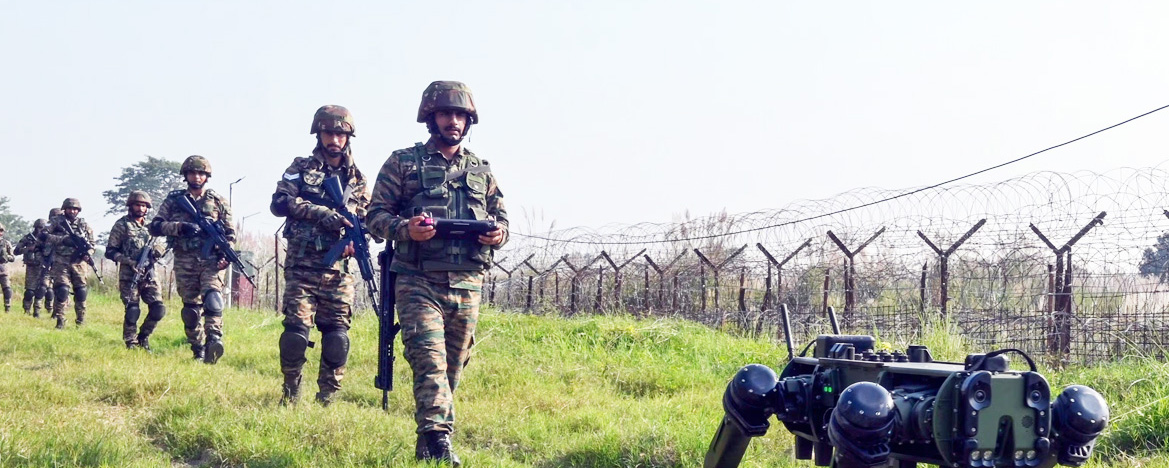
Sensing the threat, India has shifted decisively from defensive vigilance to offensive preparedness. The high-level meetings held in Siliguri in recent days—attended by top military leadership, Military Intelligence, the Research and Analysis Wing (RAW), and the Intelligence Bureau (IB)—are anything but routine. The deployment of Rafale and Sukhoi-30 MKI fighter jets, the positioning of the S-400 missile defence system, and the forward placement of BrahMos batteries convey a clear message: India will not remain limited to diplomatic protests.
The heightened activity at the Eastern Command headquarters in Sukna, along with continuous military exercises scheduled through January, reflect a larger doctrinal shift. India is adopting a “zero-tolerance” policy towards any threat to the Siliguri Corridor.
India’s Counter-Move
If Bangladesh—or the foreign powers influencing it—seek to exert pressure on India through the Siliguri Corridor, India has identified two of Bangladesh’s strategically vulnerable points: Rangpur and Chattogram (Chittagong). Together, they form what Indian security analysts are calling the “Two-Neck Strategy.”
Chattogram: A Strategic Window to the Northeast
Chattogram, historically and culturally linked to India’s Northeast, is today struggling with its own internal tensions and rising demands for autonomy. Growing resentment among local communities against Dhaka—especially regarding alleged plans to lease port infrastructure to Chinese entities—has created a unique opportunity for India.
If Chattogram were to move closer to India’s sphere of influence, it would fundamentally alter the strategic geography of the region. India’s Northeast would gain direct access to the sea through Tripura—eliminating its landlocked status and transforming the region’s economic and geopolitical destiny.
Political voices such as the Tipra Motha have openly advocated deeper integration with Chattogram, reinforcing the region’s long-standing civilisational and ethnic ties with Northeast India.
Rangpur: Bangladesh’s Northern Pressure Point
The Rangpur Division, adjoining the Indian states of West Bengal and Assam, is culturally far more aligned with North Bengal than with Dhaka. Should Dhaka escalate tensions in the Siliguri Corridor, India has the strategic option of leveraging Rangpur’s internal discontent to push back.
The recent statement by Assam Chief Minister Himanta Biswa Sarma—“Do not cast an eye on Siliguri, or we will take both your necks”—is not a mere political remark. It reflects India’s new security doctrine, which is no longer bound by the assumption of static borders.
Defence Minister Rajnath Singh’s comment regarding Sindh—that “borders can always change”—was a calibrated message, not only to Pakistan but also to Bangladesh.
Security First, Diplomacy Reconfigured
The situation in Bangladesh is likely to become even more unstable as the expected elections in February approach. For India, the meaning of its “Neighbourhood First” policy has fundamentally shifted. The principle now is “Security First.”
As anti-India forces consolidate their presence on Bangladeshi soil and the interim government in Dhaka continues to challenge India’s strategic interests, New Delhi has begun sharpening its responses across multiple axes.
The unprecedented intelligence coordination and military deployments in the Siliguri Corridor indicate India’s determination to eliminate any possibility of strategic surprise. Whether it is the new radar installations at Lalmonirhat Airbase, increased vigilance against cross-border infiltration, or stronger internal security via SIR mechanisms and enhanced border fencing—India is preparing for every contingency.
Ultimately, India’s stance is now unmistakably clear:
If Bangladesh remains a cooperative neighbour, India will extend all support. But if it threatens India’s territorial integrity or security, New Delhi will not hesitate to activate its strategic levers in Chattogram and Rangpur to neutralise the threat.
This marks a new chapter in the power equation of South Asia—one in which India is willing to project strategic depth beyond its borders to protect its vital interests. The message is unequivocal: this is a new India—fully capable, and fully willing, to break the hand that attempts to tighten a grip around its ‘Chicken Neck.’