NATO: SHIELD OR SHADOW?

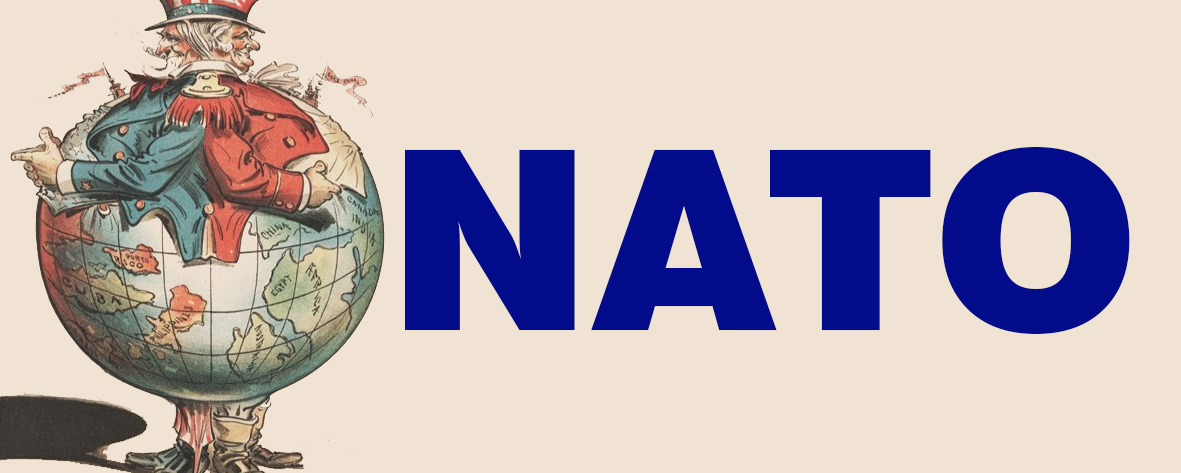
Since the formal conclusion of the Cold War, the North Atlantic Treaty Organization (NATO) has been descending into a profound identity crisis—a labyrinth from which there seems to be no exit. As we navigate the turbulent waters of 2026, NATO behaves like a piece of terminal machinery; it possesses the gears and the grease of a military alliance, yet it lacks the oxygen of a singular vision.
The war in Ukraine initially appeared as a 'miracle drug' for the alliance, a momentary jolt of electricity to its deadened limbs. However, that adrenaline has only served to delay the inevitable. Beneath the surface, the rot is absolute. NATO is no longer a cohesive shield; it is a sprawling, multi-national ghost that operates on the momentum of old habits and institutional inertia, oblivious to the fact that the world it was built to protect has already vanished.
The Blind Giants: A Strategic Schism
The greatest tragedy of modern NATO is the sensory deprivation of its members. Each nation wears a blindfold of a different color. The Eastern Europeans—the Poles and the Baltic states—are transfixed by the echoes of a Russian resurgence, feeling the cold breath of the bear on their necks. Meanwhile, in the gilded corridors of Paris and Berlin, there is a persistent, whispered quest for a 'working relationship' with Moscow—a pragmatic nuance that the frontier states view as a betrayal.
This leads to a fundamental, existential question that remains unanswered by the 32 members: Is Russia an 'existential threat' or merely a 'difficult business partner'? Washington, meanwhile, has turned its gaze toward the Pacific, viewing China as the 'systemic challenger' of the century. But here again, Europe is unwilling to gamble its massive trade ties with Beijing for an American crusade. Southern members like Italy and Greece are preoccupied with their own reality—the humanitarian surges across the Mediterranean and the festering wounds of North African terrorism. An alliance that cannot define its own enemy is an alliance that is effectively toothless on the battlefield.
The Curse of the Free-Rider: An Imbalanced Ledger
For decades, the United States has acted as the weary 'banker' of NATO, pouring a massive percentage of its GDP into the defense of a continent that often seems ungrateful. In 2026, Washington’s fatigue has finally reached a breaking point. The question echoing from the American heartland is blunt: "How long will you survive on our dime?"
According to NATO’s own charter, each member is mandated to spend at least 2% of its GDP on defense. Yet, the data for 2026 presents a farcical reality. Less than one-third of the members have met this target. The rest are 'free-riders,' resting comfortably under the American security umbrella while prioritizing their domestic welfare states. Economic stagnation and the pressures of aging populations have shackled European governments; for them, a robust military budget is viewed as political suicide. The result is a 'PowerPoint Alliance'—NATO is a roaring lion on paper, but a collection of hollowed-out commands in reality, a prisoner of its own fiscal cowardice.
Insurgents within the Tent: The Death of Consensus
The myth of NATO’s unity was shattered when nations like Turkey and Hungary began treating the alliance’s credibility as a personal toy. NATO’s greatest strength—the requirement for 'consensus'—has been weaponized into its greatest weakness. Every major decision is now held hostage by the transactional diplomacy of Ankara or the pro-Russian leanings of Budapest.
The agonizing delay in the accession of Sweden and Finland proved to the world that the enemy is no longer just at the gates; the enemy is sitting at the table. Turkey and Hungary have turned NATO into a 'political bazaar,' where security commitments are traded for domestic leverage. NATO has become a 'calcified furnace' where each member is busy baking its own bread, indifferent to the fact that the fire is slowly going out.
The 20th Century Relic in a 21st Century War
NATO’s entire architecture was designed for a 20th-century conflict—a landscape of tank columns and defined borders. But the battlefield of 2026 is a digital and hybrid nightmare. Today, wars are fought in the vacuum of cyberspace, where AI manipulates elections and satellites are targeted in the silence of orbit.
NATO possesses no comprehensive framework to counter these 'invisible' fronts. Does the alliance have a system to protect a member’s entire power grid from a coordinated cyber-assault? No. Is it prepared for the weaponization of space? No. NATO continues to look at ancient maps while the terrain beneath its feet has shifted into a new dimension. It is like a 'zombie soldier,' mindlessly repeating the drills of a forgotten era, unaware that the enemy is already inside the software of its soul.
The Reboot or the Obituary
The year 2026 is NATO’s final warning. It must decide whether it is a relevant protector or merely a 'decrepit relic' of history. If the alliance fails to adapt to the reality of hybrid warfare and multi-polar interests, it will conclude as a 'Grave of Ambition'—a historical curiosity that the world will remember but no longer need.
A 'zombie' can continue to walk as long as it has no reason to fall. But NATO’s body is already beginning to decompose. The alliance has two choices: it must either undergo a total, radical 'reboot'—embracing AI, cyber-warfare, and a new financial equilibrium—or it must quietly take its place in the dustbin of history. An alliance that lacks the capacity for security and the courage for stability is merely a protector in name only. As the curtain falls on 2026, the end of NATO is no longer a distant fear; it is a looming reality. The final farewell of the Atlantic shield is closer than it appears.