

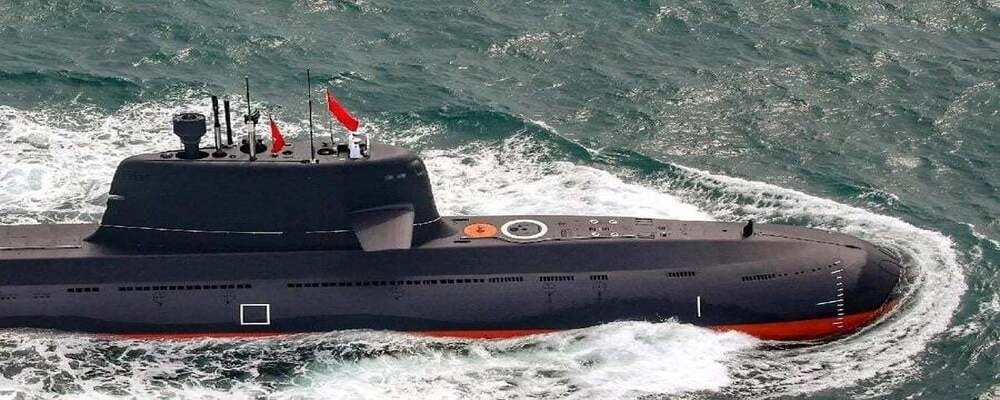
Fifty-five years ago, 'Hangor' inflicted a deep wound on the Indian Navy. Today, the same name has resurfaced in the form of ultra-modern submarines. The question is not merely about Pakistan's growing strength, but also about India's strategic sluggishness and the future of maritime security.
That cold December night of 1971 is etched in the history of the Indian Navy like a deep scar. Far off the coast of Gujarat, hidden beneath the waves of the Arabian Sea, a Pakistani submarine - PNS Hangor - launched a lethal attack on the Indian warship INS Khukri. Within minutes, that frigate sank into the abyssal depths of the ocean with 18 officers and 176 sailors. It remains the only warship in the history of independent India that we have lost to an enemy attack. Today, more than five and a half decades later, the name 'Hangor' is echoing once again in the corridors of the Indian Navy. But this time, it is not an old diesel submarine, but an entire fleet of state-of-the-art submarines being inducted by Pakistan at a pace India has not been able to achieve for decades.
In this special analysis by 'Cult Current', we will not merely talk about the number of defence deals, but will examine the bureaucratic cobweb and strategic lethargy that has put the balance of power in the Indian Ocean at risk. India is only now inching closer to 'Project-75 India' [P-75I], an ambitious programme to build six submarines. The irony is that this project has spent far more time on files and negotiating tables than it ever will at sea.
Pakistan's New Leap: The Chinese Hand and the Power of AIP
On April 30, 2026, a grand ceremony was held in Sanya, China. In the presence of Pakistani President Asif Ali Zardari, 'PNS Hangor' was inducted into the Pakistani Navy. It marked the beginning of a new era. This submarine is equipped with an Air Independent Propulsion [AIP] system. Put simply, this technology gives a submarine the power to stay underwater for weeks, because it does not need to surface to recharge its batteries or snorkel for oxygen.
Pakistan is not stopping at one submarine. At the Wuhan shipyard, three more submarines - Shushuk, Mangro and Ghazi - are already ready. Under this $5 billion deal signed in 2015, four more submarines will be assembled in Karachi. By 2028, Pakistan will have eight such submarines equipped with AIP technology. That number is more than enough to outstrip India's current capability. And that's not all. The fact that PNS Hangor reached Kota Kinabalu in Malaysia just days after its commissioning proves that Pakistan no longer wants to remain confined to defending its own shores. It is a clear message of its reach and expansion.
The Eastern Coast Question: Is Visakhapatnam Safe Anymore?
A common perception among Indian defence analysts has been that the Pakistani Navy is limited to the western coast, i.e., the Arabian Sea. But this assumption could now prove to be suicidal. Pakistan's 'Babur-3' missile, which can be launched from a submarine and is capable of carrying a nuclear warhead, has a range of 450 kilometres. If a Hangor-class submarine from Pakistan, sailing from Karachi and passing under Sri Lanka, enters the Bay of Bengal, it can directly target vital installations on India's east coast, such as Visakhapatnam.
Although some experts argue that undertaking such a long voyage and remaining undetected is difficult, in war, the mere possession of a capability is in itself a great threat. The mere presence of a Pakistani submarine near the Andaman and Nicobar Islands or at the entry points of Visakhapatnam could throw the entire strategy of the Indian Navy into disarray. India's anti-submarine network was never designed to face such a threat on two fronts.
Project-75 India: A Sad Saga of Delays
The story of P-75I is a classic example of the failure of Indian defence procurement. Its framework was laid down in 1999. Under it, six submarines were to be built based on indigenous technology. But actual work on it began only in July 2021, when the Request for Proposal was issued. Countries like Russia, France and Spain dropped out of the race due to stringent technology transfer conditions. In the end, the combine of Germany's ThyssenKrupp Marine Systems and India's Mazagon Dock Shipbuilders Limited emerged as the sole contender.
Early this year, negotiations on this deal worth around Rs 70,000 to 90,000 crore were completed. An inter-governmental agreement was signed during the German Chancellor's visit to India. But the question remains - why did we have to wait till 2026 for a job that should have started in 1998? The first submarine will not enter service before the 2030s. By then, Pakistan's new submarines will have already established their dominance at sea.
Strategic Balance and the Energy Security Crisis
India currently has 19 submarines, of which three are nuclear-powered. If P-75I is completed on time, it will not only increase the numbers but also replace the ageing Sindhughosh and Shishumar class submarines that have outlived their service life. 'Operation Sindoor' launched after the Pahalgam terror attack in 2025 had shown how crucial submarines are. At that time, Indian submarines had forced the Pakistani Navy to remain confined within Karachi harbour. But can we expect our old submarines to do this every time?
China's growing presence in the Indian Ocean is another major concern. Chinese submarines are no longer just a theoretical threat; they are a reality. India may not be able to match China in numbers, but through P-75I, it can leverage its geographical position in its home waters to create a strong cordon. 88 percent of India's energy needs are met via the sea route. In such a scenario, the security of sea lanes means not just military power, but preserving the economic lifeline of the country.
Atmanirbharta: Just a Slogan or a Reality?
The most important feature of the P-75I contract is its 'Strategic Partnership' model. Under it, the first submarine will have 45 percent indigenous content, which will increase to 60 percent by the sixth submarine. The German company will have to transfer not just the construction but also the intricacies of design to India. This is a chance to correct past mistakes, because in the Scorpene programme we only learned to assemble, not to design.
The benefit of building submarine infrastructure is not limited to conventional submarines alone. The hydraulics, fire control systems and hull materials of nuclear and conventional submarines have 60 to 70 percent commonality. Therefore, the success of P-75I will pave the ground for India's next big goal, 'Project-76', under which India wants to design fully indigenous submarines.
Industrial Impact: From Mazagon Dock to Bokaro
The impact of submarine construction is not limited to the ports of Mumbai. After two decades of hard work, the Steel Authority of India has developed a special type of steel that can withstand the salinity of seawater and extreme pressure. The iron that comes out of the plants in Bokaro and Rourkela will now become the body of submarines. Similarly, Exide Industries has developed indigenous batteries that can work in the harsh environment of a submarine.
Bharat Electronics and many private defence companies are also developing sonar systems and combat management systems. The most important role is that of the small and medium industries that supply micro-parts and precision components. More than 200 such small industries associated with Mazagon Dock will be able to flourish for the next decade because of this huge project. This is not just a defence deal, but like oxygen for India's industrial ecosystem.
Time is Slipping Away
For the policymakers in South Block, this is no time for complacency. The reality is that by the time India's first P-75I submarine hits the water, Pakistan will have eight state-of-the-art AIP submarines in active service. By then, the number of Chinese submarines will have grown even further. We cannot turn back the clock on construction, but we can certainly stop it from slowing down any further.
The history of India's submarine power has never been just about the ability to build. By building a nuclear submarine like 'Arihant', we have proved that if there is political will, we can do anything. But will that will become a continuous organizational habit?
Project-75 India alone will not be able to fill the gap created by Pakistan and China. But if it is signed immediately, built on time, and considered as the beginning of an independent submarine industry, then we can ensure that in future, whenever a name like 'Hangor' is mentioned in the history of the Indian Navy, the advantage of silence will lie with India, not with its enemies. In the depths of the ocean, he who remains silent is the victor. Now it is up to India to decide whether it will be the hunter or the hunted in this silent war.