

France erupted Thursday. Tens of thousands of workers, students and pensioners marched in about 260 towns and cities in a nationwide day of strikes called by five major unions — CFDT, CGT, FO, UNSA, FSU — their first joint action since the 2023 pension reform battles.
The numbers tell the scale. Interior Ministry: nearly 600,000 marched. CGT union: 1.6 million. In Paris alone, 80,000 to 350,000 walked from République to Nation. In Lyon, riot police fired tear gas as clashes broke out.
The trigger is familiar across Europe — and India. "Fuel, food products, rent, gas, electricity… everything's going up except wages and pensions," unions said in a joint statement, warning France is on the brink of recession with layoff plans multiplying.
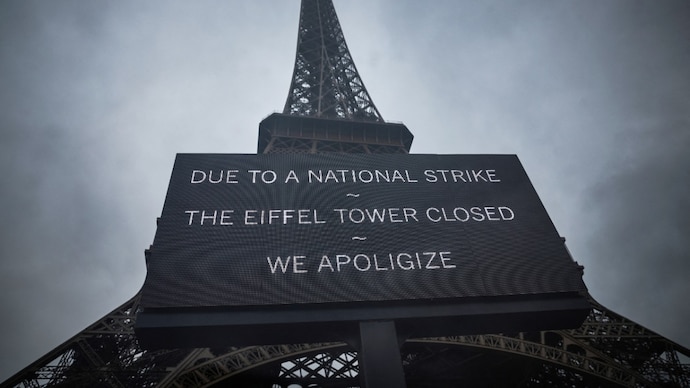
Disruption was total. A third of France's high schools closed or paralyzed by student blockades and teacher walkouts — 16% of teachers struck. Public transport snarled, nuclear power output dipped as energy workers joined, some Louvre rooms shut, and the Eiffel Tower closed for the day. Interior Minister Laurent Nuñez deployed 70,000 police with armoured vehicles, drones and helicopters; 135 arrests were reported in previous rounds.
The movement began modestly in September — a protest over staff shortages at a high school southeast of Paris — then widened to demands for more education funding, better pensions, tax fairness and a 10% hike in minimum wage (CGT demand) or €100 more monthly (CFDT).
For President Emmanuel Macron, already weakened and facing budget battles, pressure is mounting. Prime Minister Sébastien Lecornu has called emergency wage talks at Matignon on November 9.
For India, France's unrest is a cautionary mirror. India too faces food inflation at 7%+, fuel price sensitivity, and youth demanding jobs, not austerity. The difference: France's unions can shut a country with one call; India's protests are more fragmented. But the economics are same — when wages stagnate while living costs surge, politics fractures.
If France — Eurozone's second economy — tips into recession while fighting inflation, ECB will be forced to choose, Euro will wobble, and Indian exports to Europe — $95 billion — will feel the chill. And for Indian tourists, students, and 80,000-strong diaspora in France, November 5 was a reminder: carry cash, expect delays, and watch French streets — they often decide governments.
*Tags:* #FranceProtests #Macron #CostOfLiving #260Rallies #EiffelTowerShut #TradeUnions #InflationEurope #FrenchStrikes #RecessionFears #IndiaEurope